
Newcomers to Kaunas’ Silicon Valley – Lietuvos Inžinerijos Kolegija
Paskelbta: 2026-04-02 (Thursday)
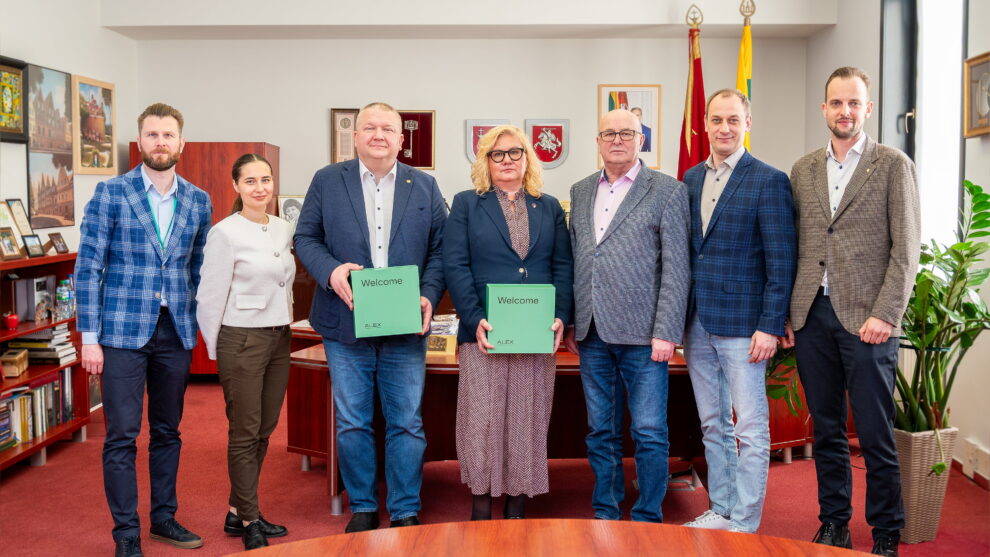
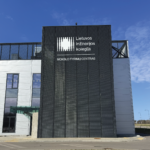
Lietuvos Inžinerijos Kolegija (LIK) is set to establish its presence at the ALEX Kaunas Innovation Hangar, becoming the first research and higher education institution to operate within the park. The institution plans to conduct applied scientific research and experimental development in the high-tech sector at this location. The projected investment will amount to approximately EUR 3.1 million. This move also aligns with the state’s strategic objective and the ambition to establish at least one branch of a science and study institution within the ALEX area by 2031.
“With over a century of experience in specialist training, the Lithuania Engineering College brings immense academic expertise, a robust business-academia collaboration model, and international partnerships with European higher education institutions to the innovation park. These represent highly significant and attractive added value.
It is vital for Kaunas that businesses and strong academic institutions work in tandem. In developing and advancing high technologies, it is essential to nurture qualified specialists capable of offering unconventional and bold solutions to employers. The decision of the Lietuvos Inžinerijos Kolegija to establish itself in the ALEX park demonstrates confidence in Kaunas and its potential,” said Kaunas Mayor Visvaldas Matijošaitis.
According to the city leader, the ALEX Kaunas Innovation Park should foster close cooperation with higher education institutions in Kaunas and across Lithuania. The park could serve as a venue for annual conferences and a platform for sharing insights into which disciplines universities and colleges should prioritise in their curricula.
“It is truly gratifying to see aircraft maintenance hangars rising near Kaunas Airport, and new hangars soon to be built at the historic S. Darius and S. Girėnas Aerodrome. Meanwhile, ALEX Park is situated on the former grounds of a helicopter repair plant – a site where world-class engineering solutions were once born,” noted V. Matijošaitis.
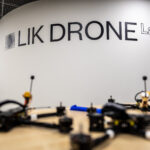
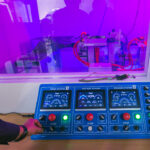
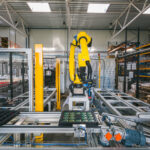
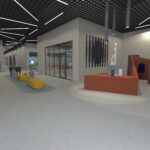
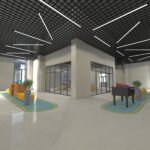
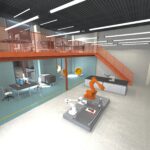
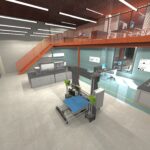
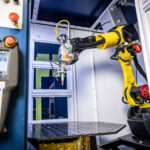
The college is investing EUR 3.1 million in the Innovation Hangar within the ALEX territory, where it will lease over 1,000 square meters of premises on the ground floor. These facilities will be dedicated to laboratories, research activities, and experimental development. The institution estimates the move will create 27 new jobs, including positions for 9 researchers.
All activities will directly address industry demands – ranging from advanced electronics and autonomous transport to energy storage, unmanned systems, and innovative solutions in structural and composite materials. The college also plans to integrate various engineering disciplines, including electronics, mechanics, energy systems, automotive, and aviation engineering.
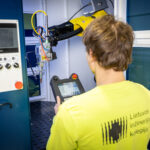
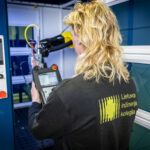
“LIK’s research is already geared toward practical application and joint ventures with the private sector. We provide companies with access to researchers, modern infrastructure, and future specialists for businesses operating in the Kaunas region, as well as for national and international entities.
We chose the ALEX Innovation Park for expansion because it is a place where science, business, and cutting-edge technologies naturally converge. This environment enables us to rapidly translate our research findings into real-world solutions and strengthen joint projects with high-tech companies. We see great potential for co-creating innovations with the investors and partners already establishing themselves here. Simultaneously, this is a strategic step in reinforcing the college’s role within the innovation ecosystem of Kaunas and Lithuania as a whole,” said LIK director Dr Lina Girdauskienė.
According to the director, the Lietuvos Inžinerijos Kolegija is one of the leading specialised engineering institutions in Lithuania. The institution boasts over a century of experience in engineering education, offering approximately 15 Professional Bachelor’s degree programmes with a strong emphasis on the synergy between theory and practice.
Historically, the college has developed technology study programmes in transportation, electronics, road engineering, construction, materials processing, aircraft mechanisms, and other technological fields. Over this period, approximately 40,000 graduates have completed their studies at the institution, and are today employed by Lithuanian and international companies.
In recent years, the college has ranked among the top three Lithuanian institutions of higher education in terms of study quality indicators and is actively engaged in sustainable engineering, green energy, and climate technology initiatives.
A key distinguishing feature of the college is LIK’s close collaboration with business. A significant portion of its research and projects are conducted alongside corporate partners; over the past three years alone, nearly 40 contracts for innovative activities have been signed. Establishing a presence in ALEX Innovation Park, which is already attracting high-tech investors, will further tighten this synergy.
It is expected that the establishment of a research institution within the park will serve as a catalyst for the innovation ecosystem both locally and across the entire city. A steady pipeline of engineering talent, shared laboratories, internships, and collaborative research projects will create a favourable environment for technology development, as well as for investments by life sciences, engineering industry, and information technology companies.
According to Tadas Stankevičius, Head of Kaunas IN, this model creates a particularly valuable collaborative environment:
“Global competition is fiercer than ever, and the most innovative and value-creating players will prevail. Kaunas already has a strong academic community and technology sector today. The ALEX Kaunas Innovation Park enables these two worlds to connect even more closely. The Lietuvos Inžinerijos Kolegija joining ALEX is not only proof of this but also a foundation for the practical creation and application of innovation in business. Students gain opportunities for real-world experience, researchers find partners, and companies gain access to talent and ideas.”
ALEX Kaunas Innovation Park spans over 30 hectares in the Aleksotas district and focuses on high-value-added activities. The park’s vision is to create a robust technology community where business, science, and talent operate in unison, positioning Kaunas as one of the region’s primary innovation hubs.
In December 2025, the Lithuanian high-tech group Teltonika announced its expansion plans here. The Lithuanian-capital company, known for industrial networking equipment, telematics, electric vehicle charging stations, and telemedicine equipment, will develop the Kaunas Technology Centre on a 4-hectare site.




Public relations of the Kaunas Municipality, “Kaunas IN“ and LIK information


Contacts
Kaunas City Municipal administration,
Municipal budgetary institution,
Laisvės al. 96, LT-44251 Kaunas
Data is kept and stored at Registry of Legal Entities
Code 188764867
VAT payer‘s code LT 887648610
2017 m. Kaunas City Municipal. It is forbidden to copy and distribute the information available at www.en.kaunas.lt without permission of the authors.